
GPT-6 has rolled out to the API and several ChatGPT subscription types (including the EU).

(I have updated MyChatty to support GPT-6 Astra as well, including Pro mode)
Astra is rumoured to be the largest model in a series of further GPT-6 models, including Luna - the smallest.
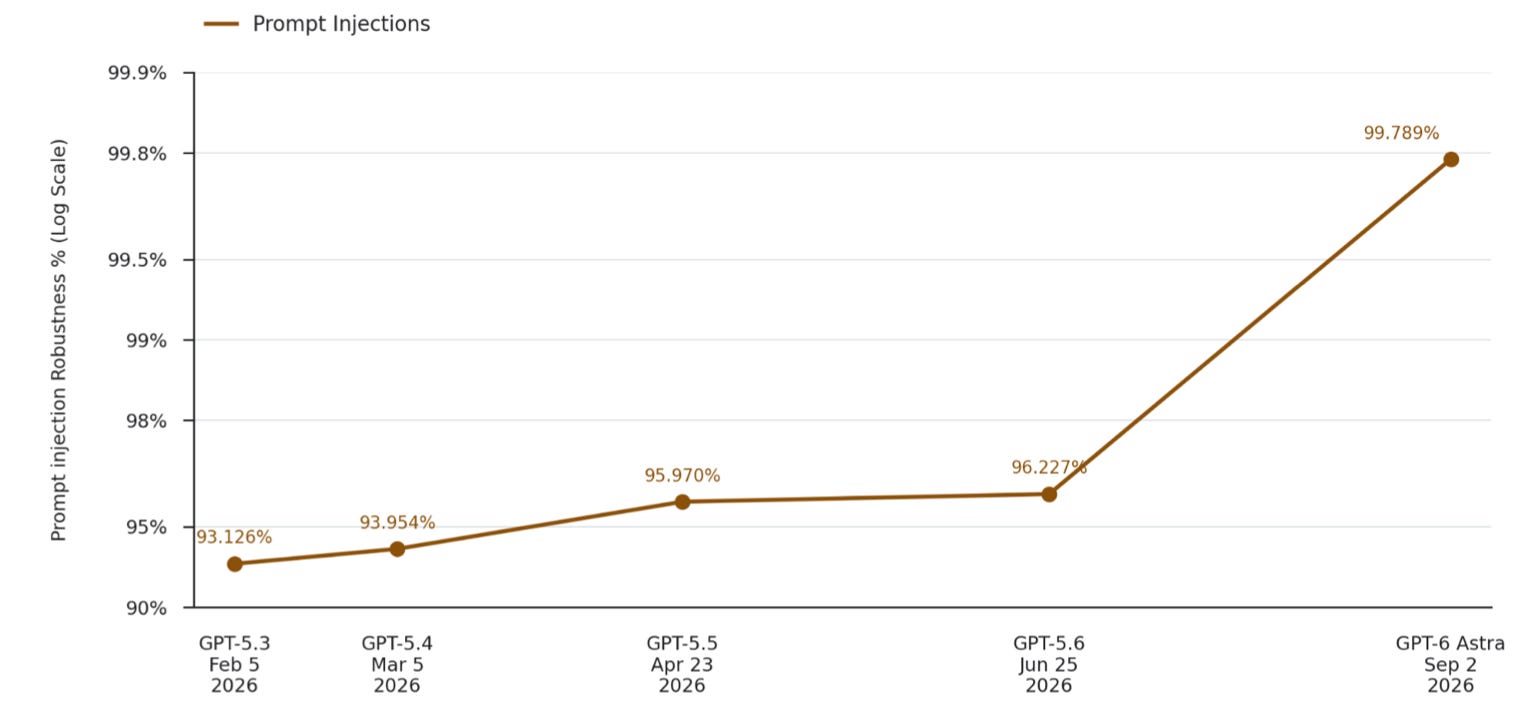
The System Card is here, with extensive notes on the model’s safety/robustness/alignment properties. OpenAI report improvements in resistance against prompt injection attacks:
Some benchmarks, as well as user sentiment on X, place Astra at or above Anthropic’s Fable 5.1 level. Most notably, Astra achieves 99.9% accuracy on the ARC-AGI-3 benchmark. (ARC-AGI-3 is a benchmark for studying agentic intelligence through novel, abstract, turn-based environments.). While Astra scored the same as GPT-5.6 Sol on the Artificial Analysis index, this amalgamation has been changed meanwhile to form version 4.2 - and GPT-6 now ranks between Opus 5 and Fable 5.1.
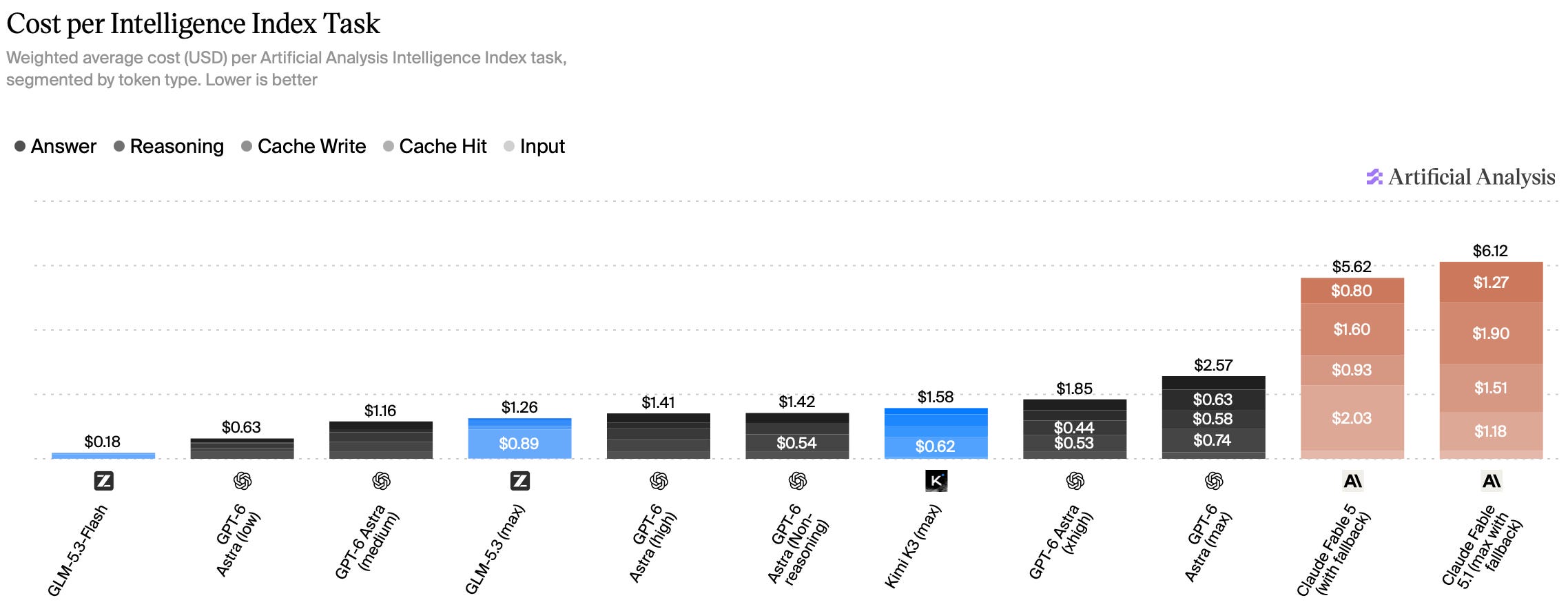
While the cost on the per-token metric is the same as Anthropic’s Fable, greater token efficiency makes it far less expensive:
On his BugHunt benchmark, Pawl Huryn reports 10% more bugs fixed at half the cost:


Mostly absent from communications is GPT-6 Pro, but it remains available in certain subscriptions tiers (not Plus, though) and the API.
API features
Two new features from the Model Guidance page that caught my eye:
Mid-turn steering: previously, prompts entered by the user while the assistant turn was still running needed to be queued up. Mid-turn steering allows the new prompt to be sent right away over the WebSocket connection, without having to wait for the assistant turn to finish.
Cache-preserving mid-conversation reasoning effort changing: up until now, changing the reasoning effort busted the prompt prefix cache. With these new instructions, the prefix remains unchanged - keeping the cache reusable.
Pro mode remains an option via the “reasoning style” parameter, and compaction remains as a feature for GPT-6 as well.
Vision
Gemini 3.8 Flash has recently received praise for its strong VLM performance. On the AA-MMM-Pro vision benchmark, Astra now is at #1, surpassing Gemini 3.8 Flash. LLMStats likewise puts Astra at #1 for image understanding - in front of Fable 5.1. On the practical side, Denis Shiryaev had success with having GPT-6 Pro put back together torn paper pieces:


Piotr Skalski has Astra entered at #1 of the Roboflow Object Detection Benchmark, concluding it notices tiny details (e.g. for tire spike inspection) and produces tight and precise bounding boxes, etc:


Computer Use
Along with the GPT-6 release, the Computer Use plugin for ChatGPT/Codex has gotten performance improvements which, according to community reports, eliminates the waits between turns from before. The improvements also benefit GPT-5.6.

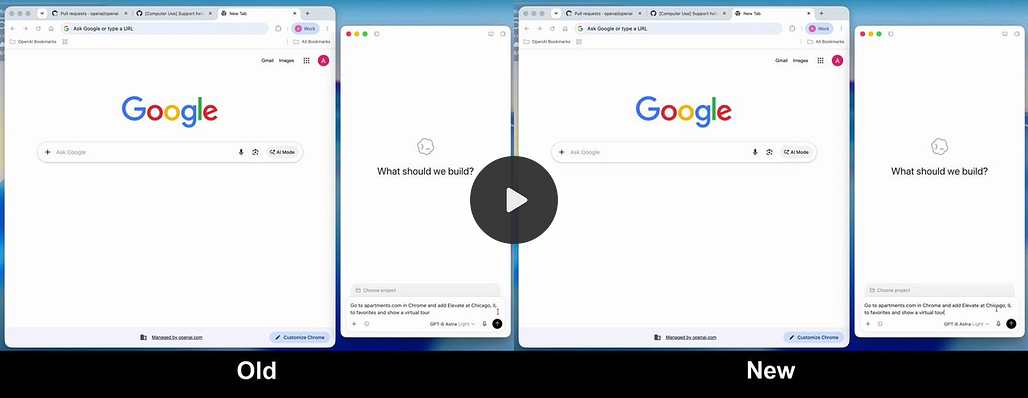
This now even allowing the model to use a virtual piano:

Community reception
3D graphics
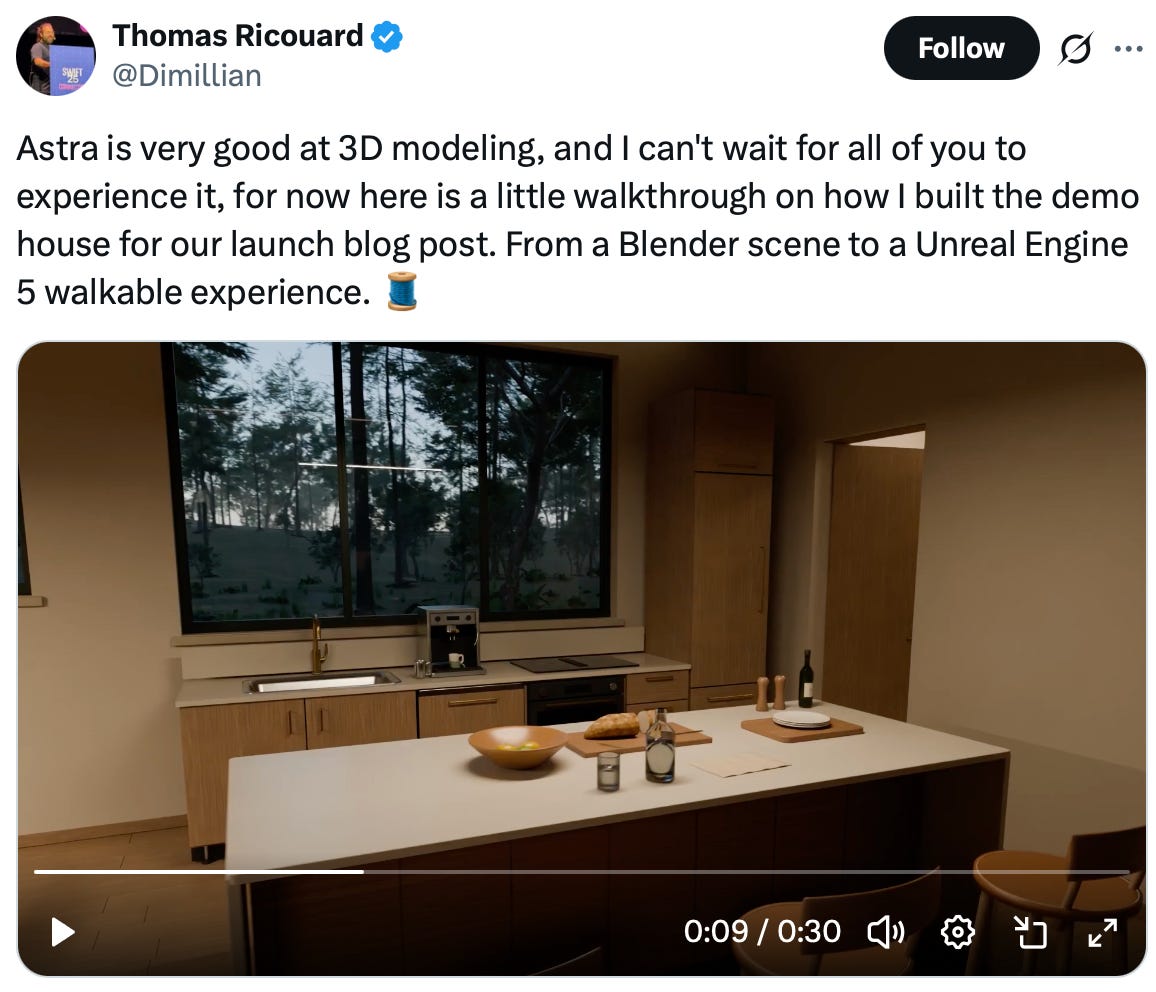
Within my filter bubble, people celebrate Astra’s 3D production skills involving Blender, three.js or Unreal Engine - making all sorts of walkthroughs and games:
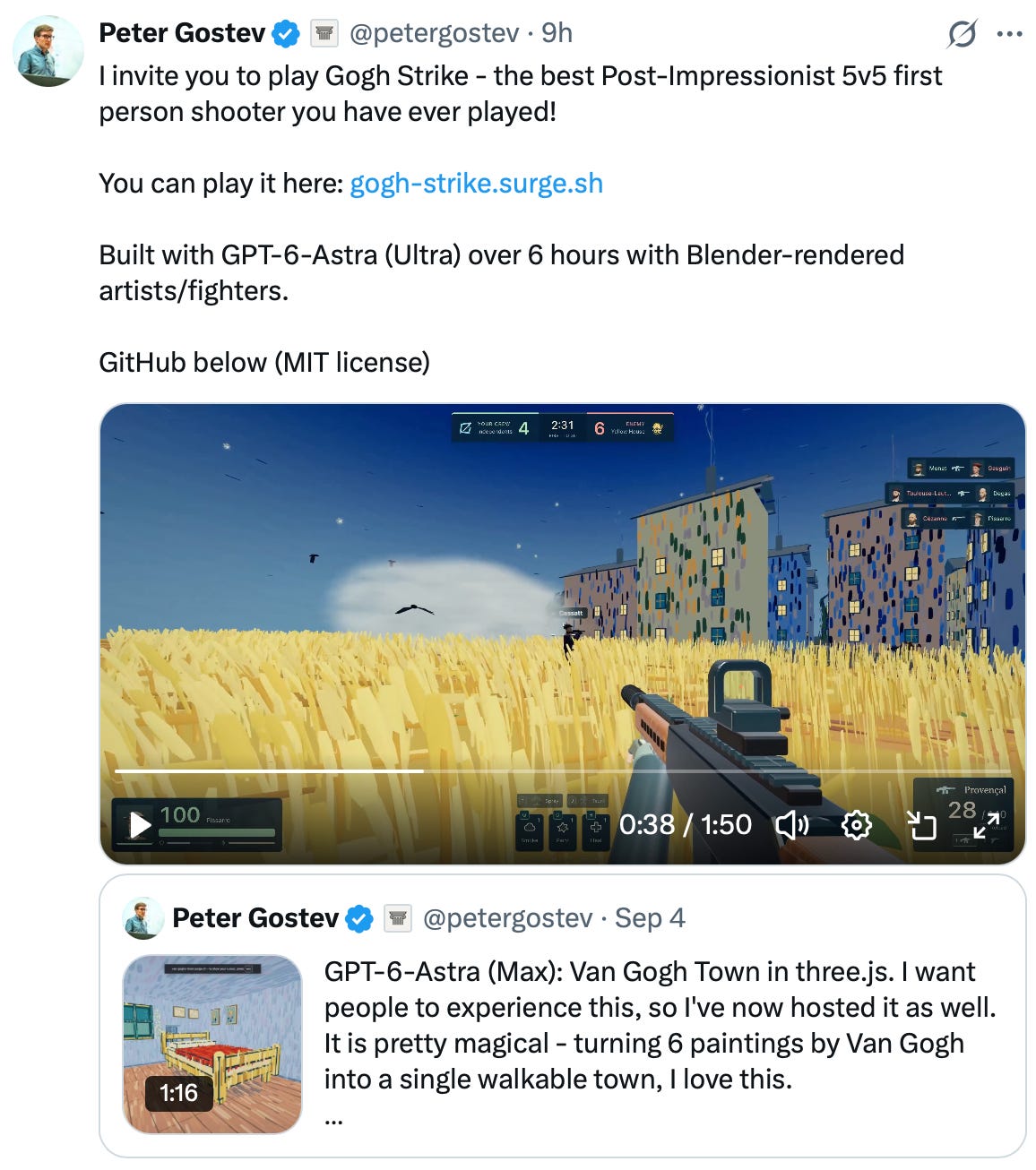
Not a showcase of realistic 3D renders but fun: Peter Gostev turned paintings by Van Gogh into a walkable town - and expanded to an ego shooter:
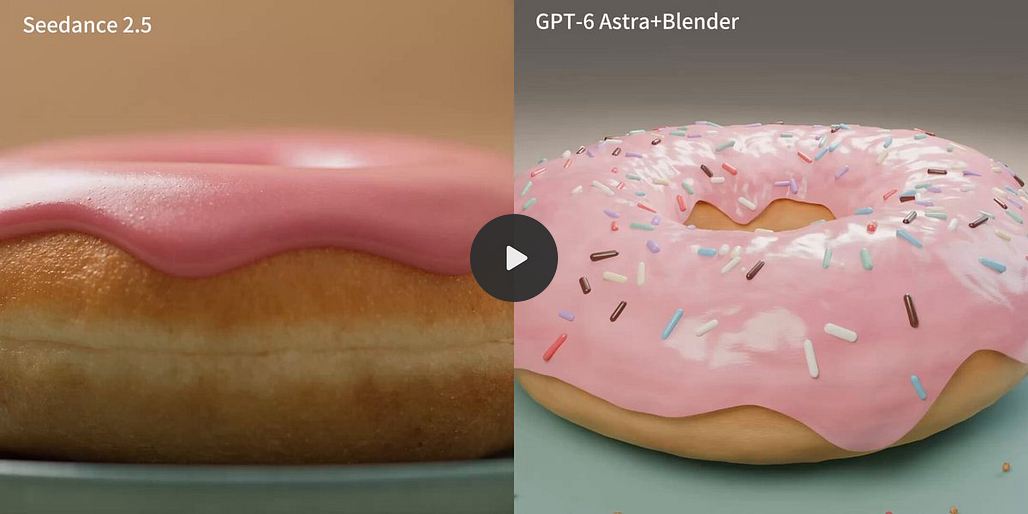
One user remarks that animating a donut with GPT-6 and Blender turned out to be more cost-efficient than using the text-to-video model Seedance 2.5:


Music
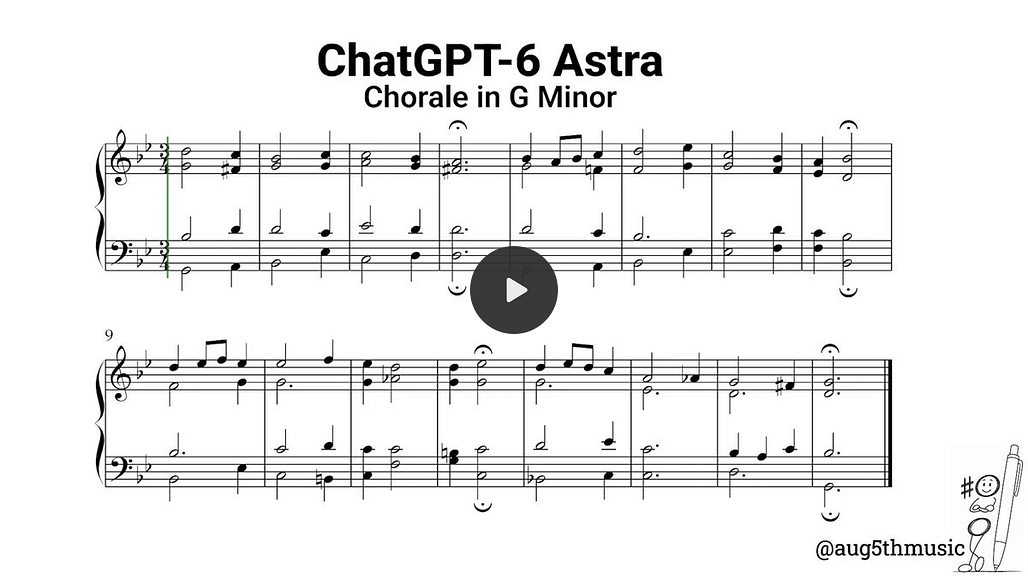
Generative AI seems to be making inroads to music production in several ways. Astra is lauded for interfacing with LilyPond and Ableton, as well as admin tasks including curation:



Other professional work
Nick Baumann @OpenAI describes his content creation process using Astra - with tool calls to ffmpeg and an ad-hoc UI for annotations. Likewise, his colleague Lindsay describes how Astra “did the majority of the manual work” she usually does on model releases - and what still remains with her (e.g. “monitoring the situation”):

Update 2026-09-06:
Jerry Liu of LlamaIndex reports first place for Astra on document parsing extraction tasks for short and medium-sized documents. However, it falls apart for long documents where Opus 4.8 in Claude Code lands at 87%, followed by GPT-5.5 in Codex at 78.9% - and Astra reaching a mere 31.7%.


GPT-6 Astra surpasses Fable 5.1 on WebDev Arena at a comfortable margin:


But Lech Mazur reports sub-par performance relative to Fable on his Debate Benchmark Champion and Short-Story Creative Writing Benchmark, perhaps hinting at writing skills not being best-in-class.
Updated article to reflect on rumours about upcoming smaller GPT-6 models that reflect the GPT-5.6 naming scheme:


